
Behind the Dashboard: What Makes Prequip’s Predictive Analytics So Accurate
Facility managers operate under constant pressure to improve overall operational efficiency in the buildings they oversee. Yet even a single equipment failure can destroy occupant comfort and quickly increase facilities management costs. Most buildings already collect real-time data from HVAC dashboards, meters, building management systems, and vendor portals, but that information is often scattered and overwhelming. Without help, it is nearly impossible to convert this noise into relevant data that meets their goals of strengthening operational efficiency and/or improving energy optimization.
Facilities managers face constant information overload. They juggle system data, manuals, weather forecasts, energy prices, lighting controls, occupancy patterns, and environmental conditions. Even the manuals alone can overwhelm an already stretched team.
Traditional building management platforms were never built to handle the volume of information facilities teams manage today. They may surface data, but they don’t unify it. While they may monitor individual systems, these traditional platforms do not explain what the data means. Until now, no overlay has brought all relevant signals together in one place to give facilities managers a complete, real-time view of building performance.
Prequip changes that.
Prequip ingests all of these inputs, contextualizes them, and delivers insights at the exact moment they are most useful. This clarity helps teams maintain stability across equipment, reduce unnecessary energy use, and improve efficiencies throughout the building.
Here we explain the AI-driven engineering behind Prequip’s accuracy and why its advanced analytics produce more reliable insights for facilities managers.
The Evolution of Predictive Analytics in Facilities Management
Predictive analytics improves how facilities teams monitor and respond to equipment issues and control energy consumption. Under these platforms, maintenance can evolve from manual inspection to preventive scheduling to AI-driven prediction that uses real-time sensor data and contextual analysis.

This technology couldn’t come at a better time: rising energy costs, workforce shortages, and increasing ESG reporting requirements are all accelerating the adoption of energy intelligence platforms, predictive maintenance software, and AI in facilities management.
Today, predictive analytics is essential for HVAC performance, energy systems, and multi-site facilities where teams need unified visibility and proactive insights. Traditional AI lacks the functionality to solve all the challenges faced by facilities managers today.
However, the latest tools combine machine learning algorithms, advanced analytics, and generative AI to help facilities transition from reactive monitoring to predictive maintenance across their building portfolios.
What’s Inside Prequip’s Predictive Analytics Engine
Facilities teams need more than reactive alerts. They need a platform that understands how their buildings behave. They also need software to detect potential issues early and prevent costly escalations.
Prequip’s predictive analytics engine delivers a higher level of intelligence. It unifies the data and context required to support a proactive maintenance strategy and reduce energy waste. This foundation can help facilities improve operational efficiency and strengthen their long term sustainability goals.
As system behavior becomes clearer and patterns emerge, teams gain the insight needed to improve operational efficiency, avoid unnecessary downtime, and capture meaningful cost savings for both building owners and occupants.
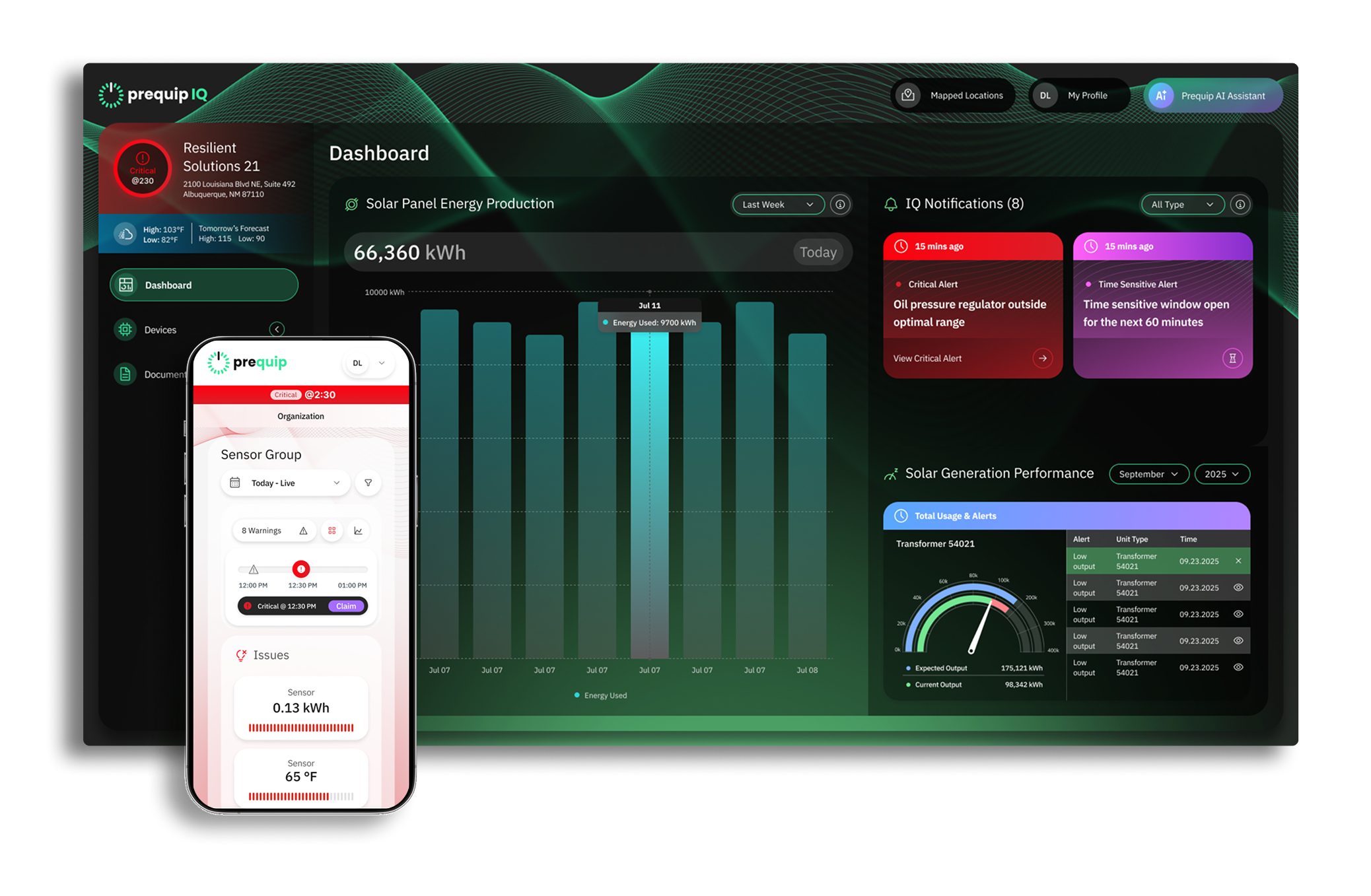
Machine Learning Models That Learn From Every Data Point
Prequip evaluates thousands of rapid-fire data points from HVAC systems, lighting controls, energy meters, occupancy trends, and the connected sensors already installed in your buildings. Our machine learning models learn the baseline for how equipment behaves during normal operation.
When a component deviates from its expected behavior, Prequip detects anomalies early and alerts the team before failure. By comparing historical data with real-time performance, Prequip reveals equipment health concerns that may not be visible during manual inspections. These insights help facilities managers solve some of their toughest mandates:
● Improve Energy Consumption
○ Reduce unnecessary energy consumption by correcting inefficiencies before they grow.
○ Strengthen overall system stability by improving energy optimization.
● Enhance Operational Efficiency
○ Improve operational functions across individual buildings and multi-site portfolios.
○ Speed up decision making by delivering valuable insights at the precise moment action is required.
● Advance Maintenance Effectiveness
○ Establish a proactive maintenance strategy that keeps equipment running at peak performance.
○ Maintain continuous monitoring that keeps maintenance schedules accurate and timely.
○ Reduce downtime by catching performance drift long before it becomes critical.
● Strengthen Building Experience and Cost Control
○ Capture substantial cost savings by reducing repairs and eliminating surprises.
○ Improve customer satisfaction through more consistent comfort and reliable system behavior.
Prequip improves the data building managers rely on by combining multiple signals into one clear view instead of forcing teams to interpret isolated thresholds. This functionality gives your teams a clearer picture of system behavior, helping them manage their workload more efficiently and with greater control.
Real-Time Sensor Tracking and Data Fusion
Prequip serves as a system agnostic building management platform. It integrates HVAC controls, lighting systems, submeters, environmental sensors, and vendor specific devices without regard to brand or age. This artificial intelligence platform creates a unified data hub with no blind spots to better optimize building function.
By fusing disparate data streams into a single connected layer, Prequip gives facilities managers clearer insight into performance risks, energy consumption patterns, and operational drift across all their building assets.
LLM-Driven Predictive Coaching
Instead of cryptic red flag alerts, Prequip uses large language models to translate analytics into clear maintenance recommendations. A typical example is when one chiller unit shows trending performance 12% above the baseline. The generative AI within Prequip may suggest, “Schedule an inspection of this unit within forty eight hours to prevent efficiency loss.”
This type of guidance supports AI-driven asset performance management that helps even the newest facilities technician understand both what is happening and why it matters. These valuable insights accelerate your response times. They also reduce unplanned downtime by helping teams act before issues escalate.
Gamification: Turning Efficiency Into Engagement
Prequip includes a gamified energy score that measures performance in real-time. When teams see efficiency improvements displayed clearly, adoption rises and engagement strengthens, whether it’s a building manager or the V.P. of Sustainability.
Gamification further motivates teams to maintain that high level of performance. A 2025 article by the Society for Human Resource Management (SHRM) says, “Gamification, when thoughtfully implemented, holds significant potential to enhance workplace dynamics by increasing employee engagement, improving productivity, and driving tangible performance outcomes.”
In a facilities management context, that boost in engagement can translate into quicker responses, more consistent adherence to best practices, and ongoing improvements in operational efficiency.
The Accuracy Advantage: Why Prequip’s AI Outperforms Traditional Tools
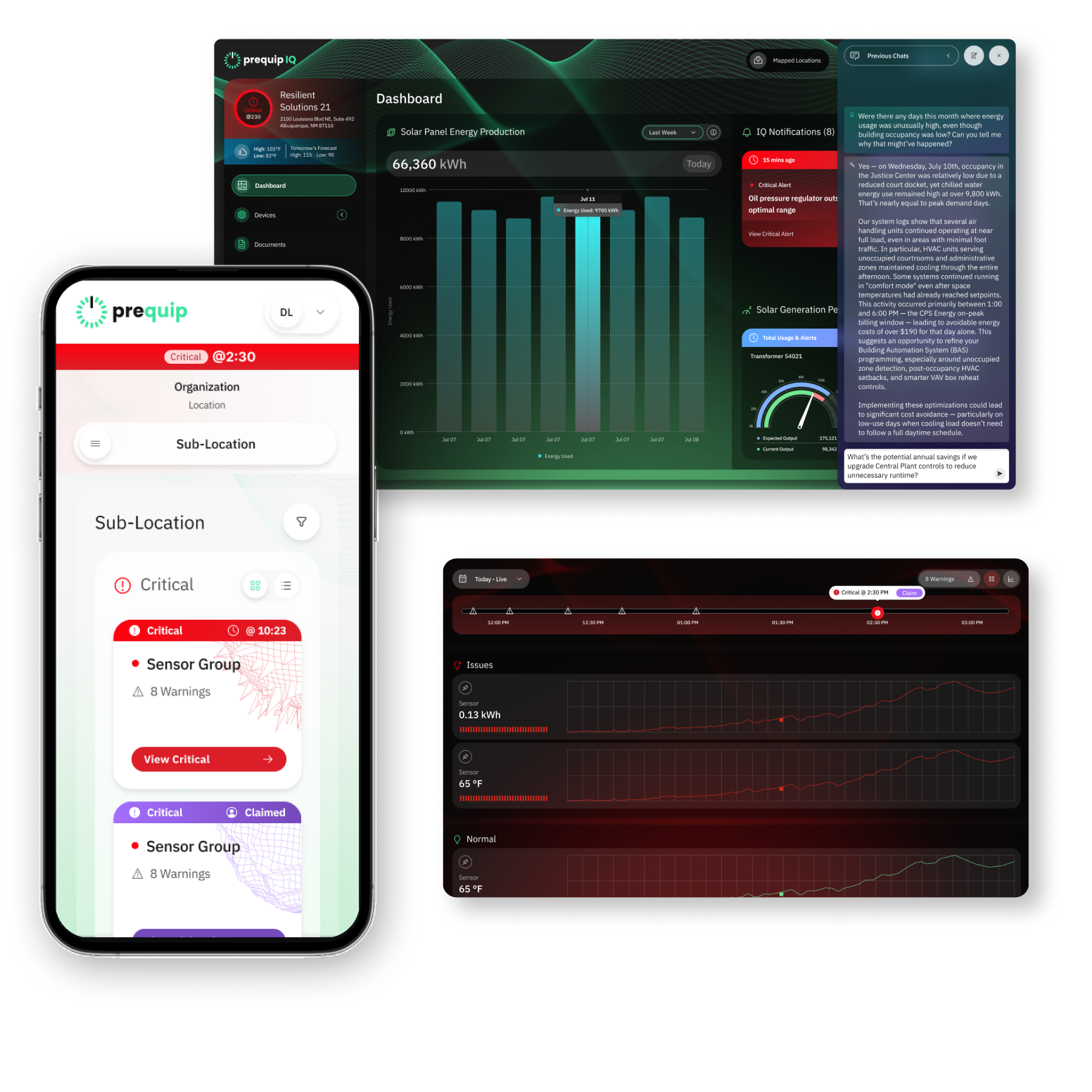
Facilities managers need more than alerts to optimize energy consumption and equipment performance. That’s why Prequip takes a different approach.
Its advanced analytics and machine learning algorithms evaluate systems in real-time and interpret the signals that matter most for building performance. These features give facilities teams a more reliable basis for action and a clearer understanding of how to keep equipment running efficiently.
Data Breadth and Depth: Why System Agnostic Data Matters
Legacy building systems rely on proprietary equipment that works only within one manufacturer’s ecosystem, limiting your overall visibility.These limitations prevent accurate prediction because they ignore the full context of building behavior.
Prequip collects deeper and broader data from all your systems. More data produces stronger models and more accurate predictive analytics for energy efficiency and building performance.
Contextual Intelligence: Predicting the Why, Not Just the When
Prequip consolidates weather patterns, occupancy trends, time of day usage, and energy pricing. These contextual factors refine prediction accuracy. Operating from one intelligent data hub helps the platform forecast:
● When the equipment is most likely to drift from the baseline metrics.
● Why the drift happened or what might cause it in the future.
● How to prevent equipment performance decline and energy consumption spikes.
Predictive maintenance alerts give facilities teams early insight into conditions that would normally catch them (and their equipment) off guard. Examples include:
● Cold Weather Events
○ Early warnings before a cold snap alerts facilities to prevent boiler strain and avoid costly heating surges.
● High Occupancy Periods
○ Notifications sent ahead of a peak-occupancy window can help facilities stabilize airflow and prevent comfort complaints.
● Major Equipment Restarts
○ Advance signals before a major equipment restart can help facilities correct load imbalances and avoid sudden energy spikes.
● Humidity Shifts
○ Alerts tied to rising humidity levels can help facilities adjust ventilation and prevent mold-risk conditions.
● Lighting and Power Demand Changes
○ Forecasts of increased lighting demand can help facilities balance loads and avoid unnecessary power spikes.
Accuracy Metrics: From Prediction Confidence to ROI
Prequip uses continuous feedback loops to retrain its models. This accuracy delivers measurable outcomes, including fewer unnecessary service calls, less downtime, faster ROI, more stable energy usage, and longer asset life.
These metrics help facility teams trust the AI to help them confidently and consistently make decisions that impact the bottom line.
From Dashboard to Decision: How Facilities Managers Use Prequip Day to Day
Simplifying Complex Operations
Facilities teams manage energy efficiency data from multiple, disconnected sources. Prequip ingests all these inputs and turns them into actionable insights. A typical workflow includes:
● Reviewing a risk score
● Reading the recommended action
● Assigning work
● Resolving the issue
● Stabilizing building performance
This entire workflow occurs in a single interface, so teams never switch between systems.
Collaboration Across Roles
Imagine if your COO, sustainability leaders, facilities manager, and technicians could all access the same unified view. Prequip’s shared visibility eliminates information silos and ensures teams make decisions using accurate, real-time performance data.
Real World Results
Prequip helps organizations reduce energy consumption and avoid equipment failures. For example:
● Hospitals can improve chiller performance ahead of peak cooling hours, reducing downtime during high-demand periods and lowering energy use in temperature-sensitive areas.
● Municipal buildings can stabilize HVAC output before weather changes so essential services remain reliable and energy budgets stay under control.
● Commercial real estate portfolios can identify early deviations in tenant-facing systems, minimizing service interruptions and strengthening comfort across multiple properties.
● University campuses can detect load imbalances before equipment restarts, which helps facilities avoid energy spikes and extend the life of critical assets.
● Corporate office buildings and mixed-use spaces can optimize lighting and ventilation based on occupancy patterns, lowering unnecessary consumption and advancing sustainability commitments .
These real world gains show how the latest artificial intelligence platforms strengthen daily operational efficiency and reduce the pressure felt by facilities teams. As more buildings adopt predictive maintenance, the opportunities grow even further.
However, this is only the beginning. Facilities teams are just starting to tap into what predictive intelligence can deliver as they move toward deeper and broader integration of these rapidly improving tools.
Building Toward Predictive Maturity: What’s Next for Smart Facilities
Predictive analytics is not the finish line for smart facilities, but rather the starting point for a new maturity curve where organizations move from predicting problems to prescribing actions and, eventually, to connected systems able to respond on their own. As facilities teams gain confidence in AI powered insights, they’ll begin to trust automation with more decisions that used to require manual judgment.
The next stage of this journey focuses on prescriptive maintenance. Instead of only signaling that an HVAC unit may fail, Prequip can recommend specific actions with suggested timelines and likely outcomes. Facilities managers will see which outcome best supports their energy goals, budget constraints, and occupant needs. This guidance turns predictive analytics into a practical playbook for everyday facility optimization.
From there, the most advanced organizations will move toward ever more autonomous systems. In this future state, AI agents will coordinate across sites within the clear guardrails set by their facilities managers. Keep in mind that human teams will remain in control while agentic AI handles routine adjustments that keep buildings efficient and resilient from hour to hour.
A simple way to visualize this path is a Predictive → Prescriptive → Autonomous maintenance maturity curve that shows how each stage builds on the prior data foundation.
RS21’s data science expertise positions Prequip to support every step on this curve. The same unified data hub that powers predictive maintenance today will support prescriptive guidance and more autonomous control as organizations (and their technologies) are ready.
Prequip will continue to evolve, even as facilities leaders refine their sustainability goals and operational strategies. Our vision is to keep Prequip’s building energy intelligence platform prepared for whatever comes next.
Smarter Buildings, Predictable Futures
The Prequip platform finally solves one of the most complex problems in facilities management: information overload.
Facilities teams work across manuals, system logs, weather models, energy markets, vendor portals, and lighting controls that rarely align. Prequip can overlay and ingest everything from an equipment manual to a system log, weather models, and lighting controls, consolidating real-time data into actionable insights delivered at the moment a decision needs to be made.
This clarity helps teams act confidently to avoid unnecessary downtime and improve energy efficiency for an entire building portfolio.
Frequently Asked Questions About Predictive Analytics and Facilities Management AI
-
This software can analyze historical patterns and real-time equipment data to detect anomalies early, forecast performance drift, and guide proactive action to prevent failures.
-
Yes. Predictive analytics identifies inefficiencies before they escalate, stabilizes system performance, and helps organizations reduce unnecessary energy usage.
-
Prequip is one of the first AI platforms designed to unify systems with agnostic integration of legacy tools, sensor connectivity without new hardware, gamified end-user interfaces, and analytics that translate directly into clear, actionable recommendations. The combination gives facility teams a faster path to operational efficiency than traditional software built around isolated dashboards or vendor-locked systems.
-
Integration is simple. Prequip connects to existing HVAC systems, lighting controls, meters, and sensors without retrofits or major IT work.
-
Yes. Prequip scales across smaller buildings and multi-site enterprise portfolios. It supports predictive maintenance for commercial buildings of any size.